Most creator deals on X are priced off one number: followers. A creator with 200K followers quotes more than one with 20K, and the brand pays it, because it's the only number either side has looked at.
But followers are a measure of the past. They tell you how many people once decided to follow an account. They don't tell you how many of those people see its posts today, whether anyone reacts, or whether the reactions come from buyers or from other creators trading replies. You aren't buying the follower count. You're buying the next post.
So we built Creator Check: paste an X handle and it tells you what that creator's typical post actually does. Upload a list with prices and it ranks the list against itself and plans how to spend your budget across it. This post walks through what it measures and why, so you can apply the same checks with or without the tool.
Judge the typical post, not the viral one
Every creator has a post that blew up. It's the one in the media kit. It's also the post you're least likely to get. Pay for a post and you get an ordinary one.
That's why every number in a check is a median, not an average. One post at 90K views can drag an average far above what the account does on a normal day; the median ignores it. Next to it we show the middle half of the range (25th to 75th percentile), so you can see how steady the account is.
Two more rules keep the numbers honest:
You're paying for a post, so replies and reposts are left out. Many accounts' timelines are mostly replies, and a reply's reach says nothing about what a paid post will get.
Views on X keep climbing for days. Measuring a post the day it goes up undercounts it, so only settled posts count.
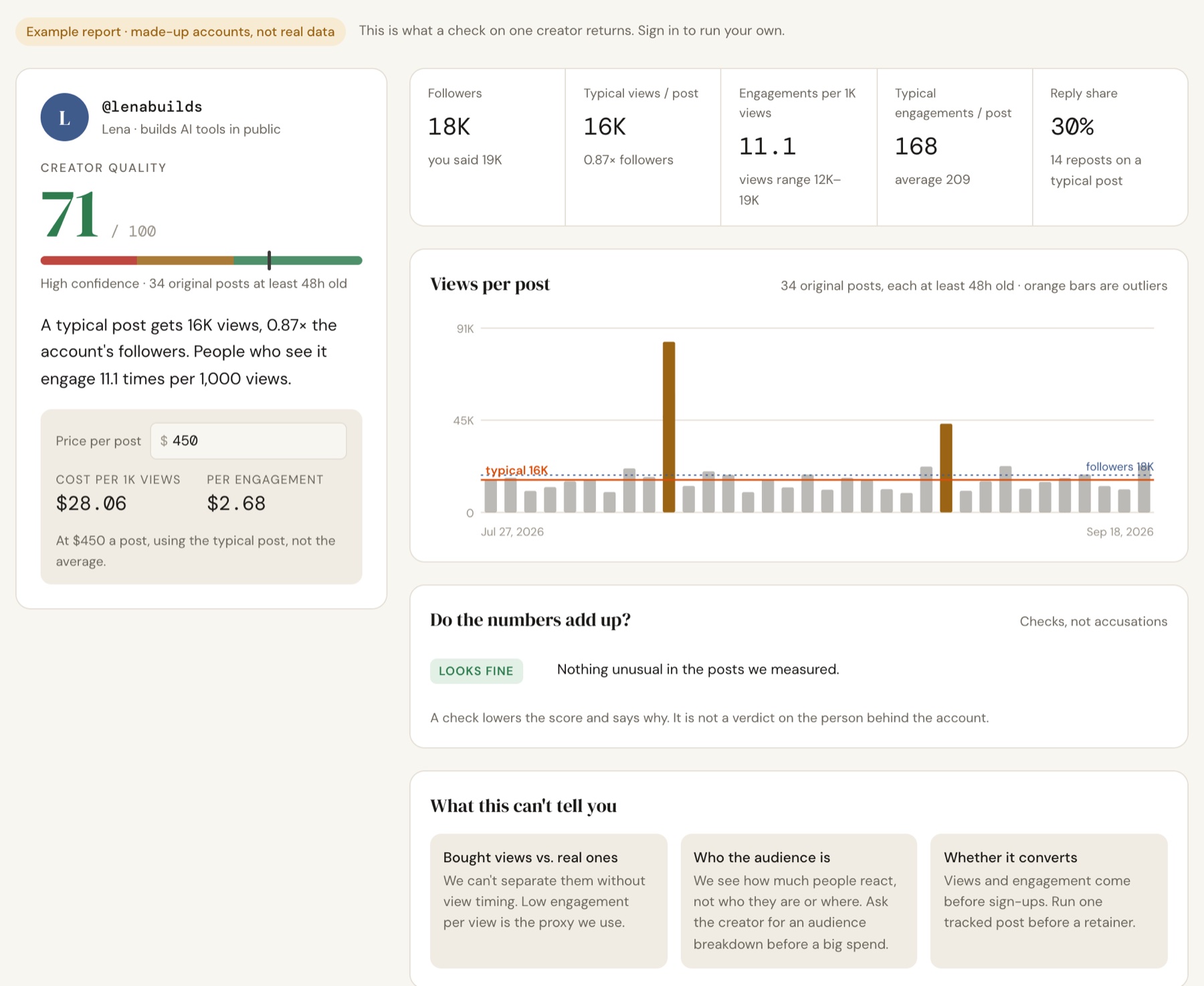
Five numbers that matter more than followers
The median views on settled original posts. This is your real reach estimate, and the number to hold a price against.
Typical views divided by followers. It shows how much of the audience is still paying attention. A large account whose posts reach a small fraction of it is selling an audience that has moved on.
How often people who see a post do something about it. This is the closest public signal to whether the audience cares. High views with almost no reaction usually means the views weren't from people who were listening.
What kind of engagement it is. A healthy post gets a mix of replies, reposts and likes. Engagement that is nearly all replies, with no reposts, is a pattern worth a second look (more below).
Enter the price they quoted and turn it into a unit cost using the typical post. Two creators quoting the same price can be far apart on what each view actually costs you.
Creators sometimes quote a follower number that is out of date, or rounded up. If you enter the number they told you, the check compares it with the live count. In the example list below, two creators claimed more than 15% more followers than they have.
Engagement that isn't coming from buyers
The most expensive mistake isn't paying for a small audience. It's paying for engagement that looks real and isn't coming from people who might buy. These are the patterns the check looks for. Each one lowers the score and says why:
One principle runs through all of these: a check is not an accusation. There are ordinary reasons for every pattern above, and none of them tells you who is behind an account. A check lowers the score and shows its reasoning, so you can decide what it's worth to you. When there isn't enough evidence either way, the score stays neutral.
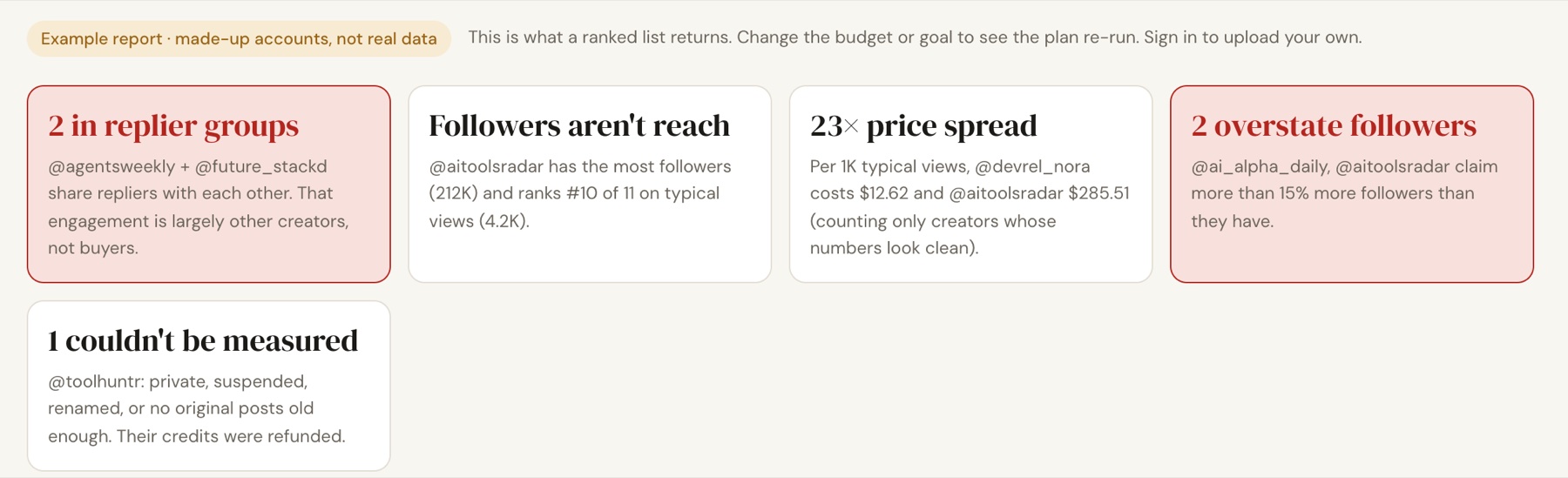
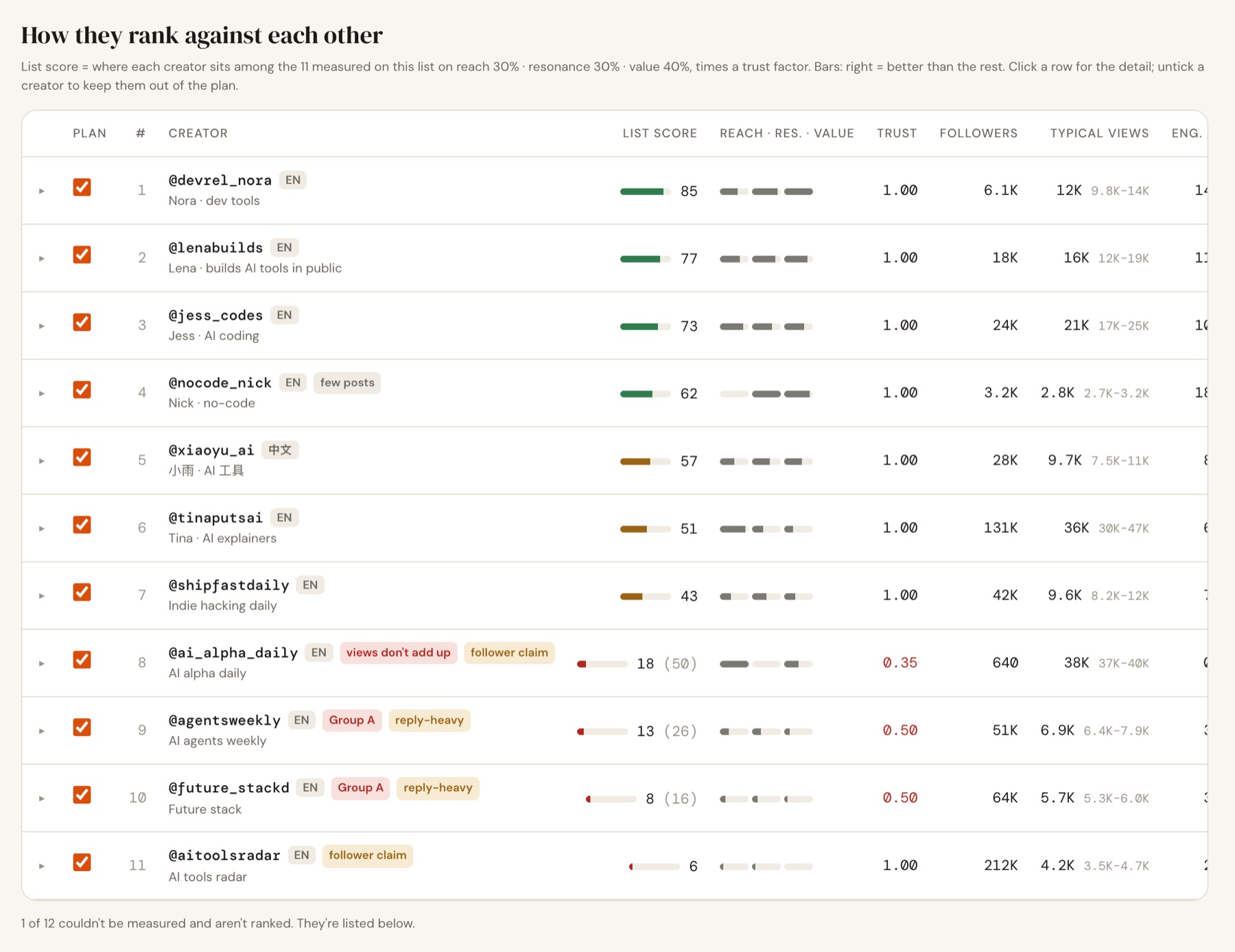
Rank the list against itself
If you're choosing between 20 creators, an absolute score for each one doesn't help much. What you need to know is which ones are better than the others on this list, for this budget.
So a list check ranks each creator against the rest on three things: reach (typical views), resonance (engagements per 1,000 views) and value (what each engagement costs at their price). Value carries the most weight, because a great creator at the wrong price is still a bad buy. Any flags from the section above multiply the score down, and creators with only a few posts are pulled towards the middle until there's enough history to judge.
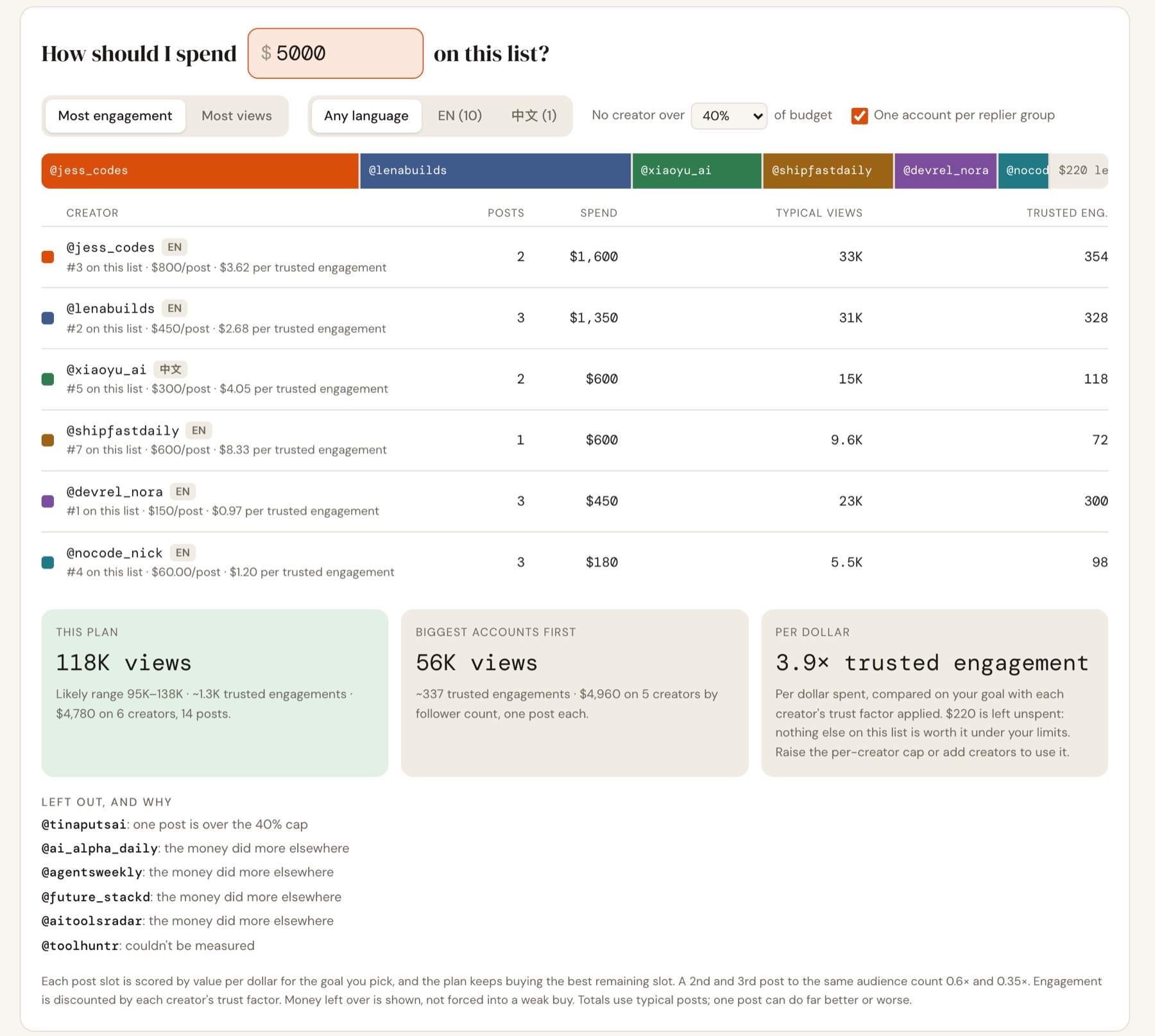
Don't just buy the biggest names
The default way to spend a creator budget is to start at the top of the follower list and work down until the money runs out. It's easy to defend and usually a poor use of the budget.
The planner does it differently. Give it a budget and a goal (most views or most engagement) and it keeps buying the best remaining post for the money. A few rules stop it from gaming itself:
A second post to the same audience counts 0.6×, a third 0.35×. People who saw the first one don't become new reach.
No single creator takes more than a set share of the budget, so one account can't become the whole campaign.
If two creators share an audience of repliers, the plan can keep only one of them.
Posts only reach buyers who read them. The plan can be limited to creators posting in your market's language.
If nothing else on the list is worth it, the plan says so instead of spending the rest on a weak buy.
Every plan is shown next to the "biggest accounts first" approach with the same budget, so you can see what the default would have bought.
What a check can't tell you
A check reads public posts. That puts some things out of reach, and it's better to know them before you spend:
Check your next creator
Creator Check is free for a single creator once you're signed in. A list costs 10 credits per creator. Upload a CSV or paste a Google Sheet link with handles and prices, and any creator we can't measure is refunded.
Checking before you pay is the first half. The second half is measuring after the post goes up: Retro takes any launch post and shows who actually carried it.
The best creator for your product is rarely the biggest one. It's usually someone whose audience still listens, and often someone who already uses what you've built.